
Hank Green
Self - Host

TV SERIES
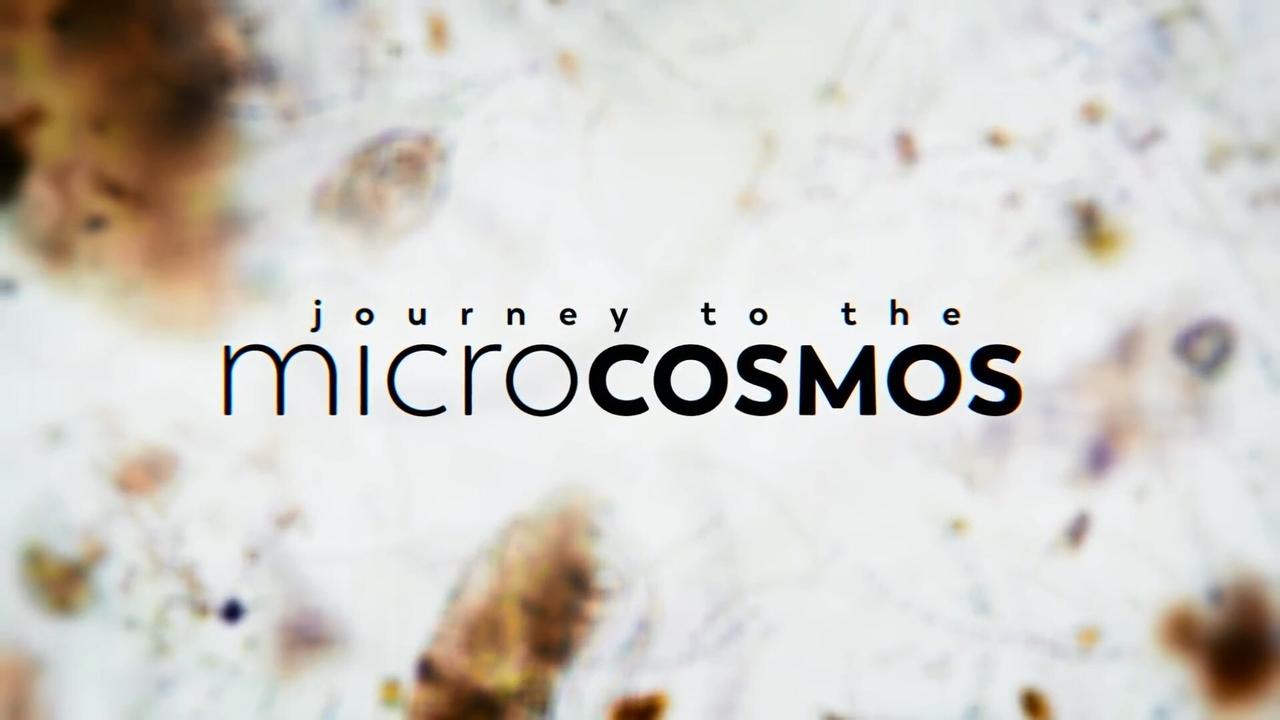
Take a dive into the tiny, unseen world that surrounds us! With music by Andrew Huang, footage from James Weiss, and narration by Hank Green, we want to take you on a fascinating, reflective journey through the microcosmos.
Self - Host

2024Series

2005Series
2020Series
2020Series

2006Series

1994Series

2022Series

2010Series

2019Series

2020Series

2023Series

2025Series
 01
01Join us on the first episode of Journey to the Microcosmos as we take a dive into the tiny, unseen world that surrounds us! With music by Andrew Huang, footage from James Weiss, and narration by Hank Green, we hope to take you on a fascinating, reflective journey!
02On this week's journey, we explore the ways things eat in the microcosmos, from Stentors filter feeding to Dileptus hunting down and absorbing its prey.
03It's time to meet a single-celled organism that is bigger than a tardigrade! We'll learn how Stentors reproduce, why they look like trumpets, and why some of them are just SO BLUE!
04How do stentors make more stentors? Does Paramecium reproduce sexually or asexually? Find out on this week's journey as we explore the ways the microcosmos reproduce!
051.8 billion years ago, a cell ate another cell, but it didn't digest it, and without that happening, we would not exist. This week we explore the origins of eukaryotic cells and ask the question, "Are our cells more than ourselves?"
06We know these cute little water bears can survive the vacuum of space but are they actually immortal? We'll explore that and other misconceptions about tardigrades in this week's journey!
07If you were a protozoan, how would you zoom zoom zoom all around the microcosmos? From false feet to microtubules, find out how these single-celled eukaryotes make their way through the universe.
08We owe so much to diatoms! They help us make beer, paint, and kitty litter, and they're responsible for some of the air you're breathing right now!
09Let's journey deep into the cells themselves to take a look at some of the structures that keep cells alive and others that do... something... that we'll figure out someday... probably.
10In the microcosmos, it's dangerous to go alone. This week we go on a journey into colonies to find out why sticking together is such a great strategy!
11Death is inevitable and mysterious, even in the microcosmos. Stentors, heliozoans, and yes, even tardigrades, experience death in many different ways.
12Euglenoids have had a very, very long time to evolve, and that has led to the things they have evolved into being extremely diverse—so diverse that, combined with the varied shape-shifting abilities of its member species, euglenoids have proven challenging to both identify and classify.
13The hydra of mythology may not be as far off from reality as you think! Let's take a journey to the mall to meet our tentacled, regenerating friends!
14This week, we're taking a bit of a break, but we thought you might also like one. So, today, let's all just sit and look at our lovely little friends while we take a breath and enjoy Andrew Huang's amazing music.
15Slimy, a little smelly, maybe even a little gross, but to many organisms, the oxic-anoxic transition is a shifting chemical boundary that has created a challenge for life...a challenge it conquered.
16We also don't really know what rotifers are... but we'll try to tell you as much as we know!
17Life is chemistry. From diatom to Diana, life is not a magical imbued trait, is a process of the physics of our universe. The precise and convoluted chemistry of life requires specific physical and chemical situations. And this planet has a dizzying variety of such circumstances that, over millions or even billions of years, living chemical systems have evolved to thrive in.
18Yes, they might eat your brain, but there's a lot more to amoebas than that!
19We see the colors of the microcosmos every single week, but let's stop and ask why our some microbes are bright green, while others are a golden brown.
20This week, the microcosmos meet the cosmos as we explore even more fascinating things about our friend, the tardigrade. We'll discuss their weird weird mouths, how we take care of our tardigrades, and what's going to happen to those tardigrades that crashed into the moon.
21Where is the line between good and bad microorganisms and why do we seem to know so much more about the bad ones?
22These world travelers might be, well, almost everywhere, but there is a still a lot we don't know about the famous paramecium.
23Microbes are used for everything from baking to brewing, but wastewater treatment is where they do some of their most important work.
24No episode synopsis is available.
25This week, we're diving back into the world of Stentors to find out what humans and Stentors have in common!
26These little hairy-bellied friends lead a very interesting life, albeit a short one.
27This week's journey comes to you unedited and in real-time as we explore a mysterious infection.
28In a world without microbes, this channel wouldn't exist. But there are other, more important things that would stop existing as well, and today we're going to explore just what could survive a world without our little micro friends, and for how long.
29No episode synopsis is available.
30No episode synopsis is available.